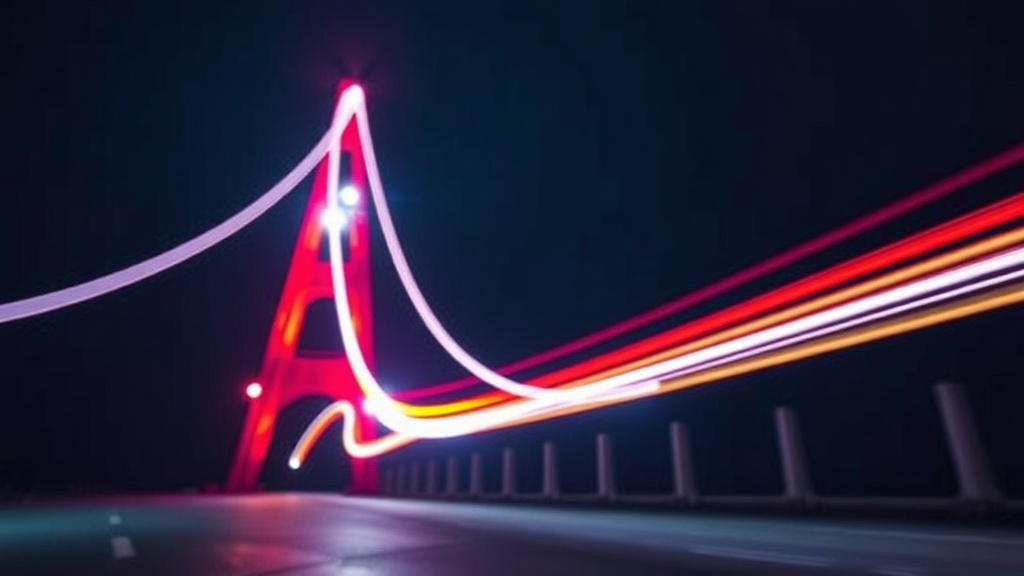
Finding Perfect Balance with Long Exposure Light Painting
A single beam of light cuts through a pitch-black forest, dancing across the bark of a cedar tree. One moment, the light is a soft, sweeping wash of amber; the next, it’s a sharp, concentrated streak of white that carves out the texture of a rock face. This is the art of light painting—a way to use handheld light sources to "paint" subjects during a long exposure. This guide breaks down how to balance light intensity, movement, and timing to move beyond messy light trails and into professional-grade subject illumination.
Most people treat light painting like a toy. They run around with a flashlight, waving it wildly, and end up with a blown-out, white mess that looks nothing like a photograph. To get it right, you need to treat your light source as a controlled brush. It isn't just about making things bright; it's about controlled, intentional exposure.
What Gear Do I Need for Light Painting?
You need a stable tripod, a camera with manual controls, and a variety of light sources with different intensities. While you can use anything from a high-end LED panel to a simple glow stick, the quality of your result depends heavily on how much control you have over the light's output.
I usually reach for a Maglite for broad strokes or a Lume Cube for more controlled, directional light. If you're working with more subtle textures, a small LED panel with a diffuser is a lifesaver. You don't want a harsh, "naked" light hitting your subject—that looks amateur. Use a bounce or a diffuser to soften the light before it hits the subject.
Here is a quick breakdown of common light tools:
| Light Source Type | Best Use Case | Control Level |
|---|---|---|
| Standard Flashlight | Broadly illuminating large areas | Low (Hard light) |
| LED Wand (e.g., Godox) | Creating specific light paths | Medium (Adjustable) |
| RGB Light Stick | Adding color/mood to a scene | High (Color Control) |
| Smartphone Screen | Small, localized-light accents | High (Precision) |
Don't forget about your shutter release. If you're the one holding the light, you can't be the one pressing the button. A remote shutter release—or even a simple smartphone app—is a non-negotiable piece of gear here. If you're trying to master the technical side of long exposures, check out my previous post on mastering night photography techniques and gear.
How Do I Control Light Intensity During a Long Exposure?
Control intensity by managing the distance between your light source and the subject, and by adjusting the brightness of the light itself. Light follows the inverse-square law—a principle explained in detail on Wikipedia—which means as you move twice as far away, the light intensity drops significantly.
If you're too close, you'll blow out the highlights and lose all the detail in the texture. If you're too far, the light won't register on the sensor at all. I find that "pulsing" the light works better than one long, continuous sweep. Instead of one long pass, try several short, controlled movements. This gives you more opportunities to fix mistakes in post-processing.
The "Distance vs. Brightness" Rule:
- Close Proximity: High intensity, high risk of "hot spots" (overexposed areas).
- Medium Distance: Best for general subject illumination and soft shadows.
- Far Distance: Good for creating ambient "glow" or background light.
A common mistake is forgetting the background. If you only light the subject, the photo can look like a studio shot in the middle of nowhere. Acknowously "painting" some light onto a nearby tree or a rock in the background helps ground the subject in the environment. It creates a sense of depth that a single-point light source usually lacks.
How Can I Avoid Blown-Out Highlights?
Avoid blown-out highlights by using lower-power light sources and keeping your camera's ISO and aperture settings optimized for the ambient light. If your light is too bright, you'll lose the texture of the object you're trying to showcase.
The trick is to work with the light, not against it. If you're using a powerful light like a SureFire tactical flashlight, don't point it directly at the camera lens or the most reflective part of your subject. Instead, bounce the light off a nearby surface or use a piece of translucent paper to diffuse the beam. This creates a much more natural look.
Also, watch your histogram. If the graph is hugging the far right side, your highlights are clipping. You can't fix a white, featureless blob in Lightroom. It's better to have a slightly underexposed subject that you can brighten later than a bright subject that has lost all its detail. This is a fundamental part of stunning night photography results.
One thing I’ve learned: your eyes lie to you in the dark. What looks "bright enough" to your eyes might be way too bright for a 30-second exposure. Always take a test shot. Take a 5-second exposure, check the screen, and adjust your light movement accordingly before committing to a full minute-long shot.
The Three Stages of a Light Paint
To get a professional result, think of your light painting in three distinct stages:
- The Base Layer: This is your ambient light. This could be the moonlight, the stars, or even a distant streetlamp. This sets the mood and the baseline exposure.
- The Subject Fill: This is where you use a soft, diffused light to wrap around the subject. It provides the shape and texture.
- The Accent: This is the "wow" factor. A sharp, colored light or a bright beam that highlights a specific edge or a striking feature.
I often use a different color temperature for the accent. If the ambient light is a cool, blue moonlight, I might use a warm, amber light for the accent. This creates a visual tension that makes the photo pop. It's a simple way to add professional polish without needing expensive gear.
When you're out in the field, remember that movement is everything. If you're too fast, the light won't register. If you're too slow, you'll overexpose. It's a delicate dance. I've spent more than a few nights standing in the cold, perfectly still, waiting for the right moment to move my light. It takes patience, but the results are worth it.
Don't be afraid to experiment with different tools. Sometimes, a simple glow stick provides a much more organic, ethereal light than a high-tech LED. The goal isn't to use the most expensive gear; it's to use the most effective light for the story you're telling.