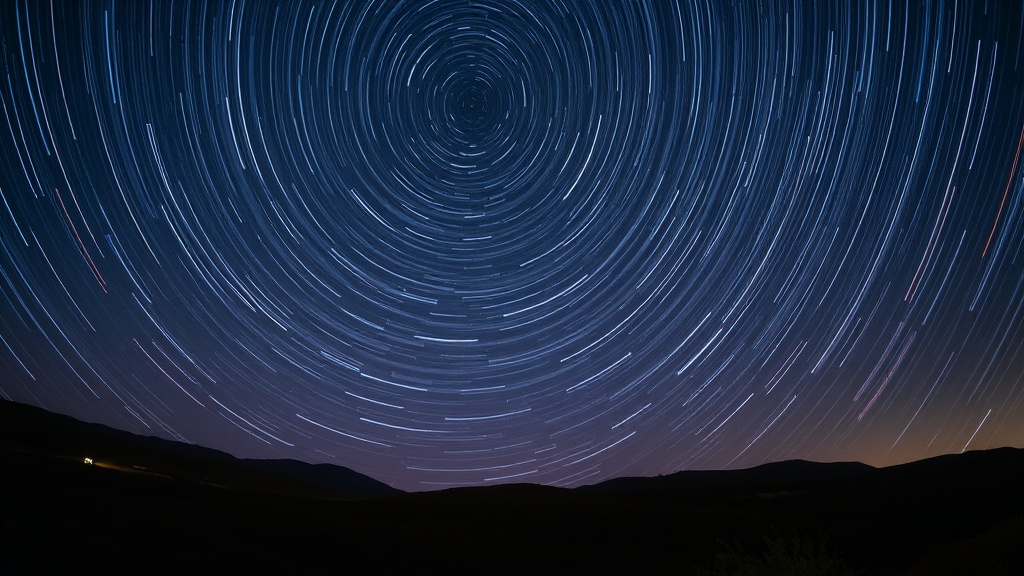
Tracing Celestial Arcs: A Practical Guide to Capturing Star Trails

Unlocking the Night's Slow Dance Through Your Lens
Capturing star trails offers a uniquely compelling way to showcase the Earth's rotation and the seemingly static beauty of the night sky. This guide will walk you through the essential techniques and gear considerations for creating striking star trail photographs, moving beyond simple astrophotography to reveal the dynamic movement above us. You'll learn how to plan your shoot, configure your camera settings for optimal results, and process your images to achieve those mesmerizing concentric circles or dramatic arcs of light.
What Gear Do You Really Need for Star Trail Photography?
You don't need a professional studio's worth of equipment to begin, but certain tools make the process significantly smoother and more successful. At its core, star trail photography relies on accumulating light over an extended period, meaning stability and control are paramount. First, you'll need a camera capable of manual control, ideally a DSLR or mirrorless model, though some advanced compact cameras can manage. The ability to set ISO, aperture, and shutter speed independently is non-negotiable. A wide-angle lens, preferably with a fast aperture (f/2.8 or wider), is your best friend here. Wider lenses capture more of the sky, giving you a grander perspective for your trails, and faster apertures gather more light, which can reduce your overall shooting time or allow for lower ISOs, minimizing noise.
Next, a sturdy tripod is absolutely essential. Any camera movement during your long exposure sequence will result in blurred or broken trails. Don't skimp on this — a wobbly tripod is a recipe for frustration. Consider a model with a hook on the center column where you can hang a weight (like your camera bag) for added stability on windy nights. An intervalometer (or a camera with a built-in interval shooting function) is another critical piece of kit. This device automates the process of taking multiple exposures over time, freeing you from repeatedly pressing the shutter button and introducing camera shake. If your camera lacks an internal intervalometer, an external one is inexpensive and invaluable. Spare batteries are also a must; long exposures drain power quickly, especially in cold temperatures. Always bring at least two fully charged spares, or consider a dummy battery with an external power bank if you're planning an all-night session.
How Do You Best Plan Your Star Trail Shoot?
Preparation is perhaps the most crucial step in successful star trail photography. You can have the best gear, but without proper planning, your results will likely disappoint. Your first consideration should always be light pollution. Use websites like