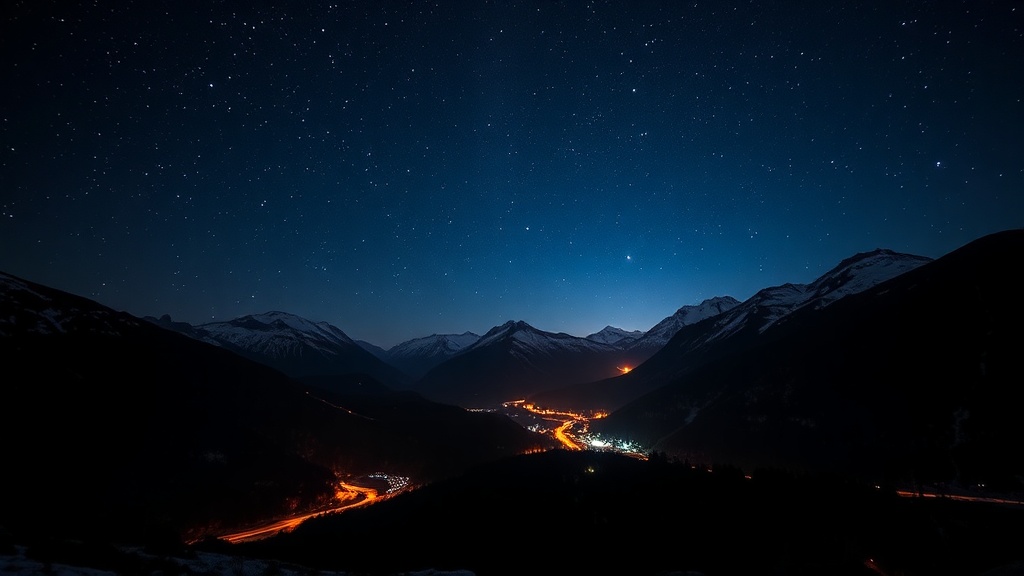
Finding the Right Focal Length for Night Landscapes

Why does your wide-angle lens feel too narrow at night?
Have you ever set up a tripod, looked at a stunning vista, and realized your lens just can't capture the scale of the scene? It's a common frustration. When the sun goes down, our field of view feels restricted by the lack of light, and we often find ourselves wanting to pull back to see more of the sky or the horizon. This isn't just a matter of preference; it's a technical challenge involving light gathering capability and the physics of your sensor.
Choosing a focal length for night photography isn't just about what looks pretty. It's about how much light you can pull into the camera and how much of the sky you want to include in your composition. A wider lens might capture more of the Milky Way, but it might also introduce more edge distortion or coma near the corners of your frame. A tighter lens might provide better detail in distant stars, but you'll need longer exposures to keep the light from falling off. We're going to look at how these choices impact your final image.
Does a wider lens always mean better night shots?
Not necessarily. While a 14mm or 20mm lens is a staple for many astrophotographers, it isn't a magic bullet. The wider the lens, the more you have to contend with the quality of your glass at the edges. Cheap wide-angle lenses often suffer from heavy vignetting—that's the darkening of the corners—and star smearing. If you're shooting a Milky Way shot, a lens that is too wide might make the subject feel disconnected from the foreground.
On the other hand, a mid-range focal length like 35mm or 50mm can be incredibly effective for light painting or capturing cityscapes. These lenses often have better central sharpness and can handle the high-contrast transitions between bright street lamps and deep shadows more gracefully. You have to balance the desire for a wide field of view with the reality of your lens's optical performance. If your lens has poor coma control, those bright stars will look like little seagulls rather than sharp points of light. You can check your lens's performance by looking at specialized reviews on sites like DPReview, which often test lens sharpness across different focal lengths.
Consider the following trade-offs when picking your gear:
- Wide Angles (14mm - 24mm): Best for massive celestial views and deep space feeling, but prone to edge distortion and vignetting.
- Standard Lenses (35mm - 50mm): Great for environmental portraits or light painting, offering better control over the subject, but they limit how much sky you see.
- Telephoto Lenses (85mm - 200mm+): Perfect for compressing distant mountains or zooming in on nebulae, but they require much more stable tripod setups and higher-quality glass to avoid softness.
Sometimes, the best tool isn't the widest one; it's the one that actually captures the light where you want it. If you're shooting a star trail, a wider lens is great for showing the rotation, but a tighter lens can show the detail in the movement of a single star cluster.
How much light does focal length actually affect?
It's a common misconception that the focal length alone dictates the light. It's actually the aperture (the f-stop) that does the heavy lifting, but the two are intrinsically linked in your workflow. A fast lens (like an f/1.4 or f/2.8) is your best friend, regardless of whether it's a 14mm or a 50mm. The focal length determines the magnification, but the aperture determines the brightness. If you use a long focal length with a slow aperture, you're going to struggle to get a clean image without massive amounts of noise.
When you're out in the field, especially in places with low light, you'll notice that as you increase your focal length, your exposure time must decrease to avoid star trailing. This is why many photographers use the "500 Rule"—though a more accurate version for modern high-resolution sensors is the "NPF Rule"—to determine the maximum shutter speed before stars start to blur. If you're using a 200mm lens, your exposure might only be 5-8 seconds before the stars move. If you're at 14mm, you might be able to go 25-30 seconds.
This relationship is vital for your planning. If you want to capture long-exposure light trails from cars, a wider lens might be better to capture the entire flow of traffic. If you want to focus on a single light-painted object, a slightly longer lens might help isolate that subject from a distracting background. Don't just grab the widest lens in your bag and hope for the best. Think about the light density and how much movement you're willing to tolerate in your frame.
For more technical data on how light behaves across different focal lengths, the Photography Life resources are excellent for understanding the math behind your shots. Understanding the relationship between focal length, aperture, and shutter speed is what separates a lucky shot from a controlled, professional result.
When you're composing your shot, don't be afraid to move your tripod. Sometimes, moving five feet to the left or right changes the focal plane enough to make a massive difference in how the light hits your sensor. A lens that looks great in the center might look terrible at the edges due to the way it handles light at steep angles. Test your compositions with a preview shot—don't just rely on the LCD screen, as it can be deceiving in low-light environments.